
Running a Sex Offender Check in Branch County
The Michigan Public Sex Offender Registry, or PSOR, is the first public channel for a Branch County search. Michigan State Police manages it under the Sex Offenders Registration Act. It publishes the subset of registration data that state law makes public. A name search works best with both first and last name. An area search can use Branch County, a city, a ZIP code, or a street address with added location detail. A map search adds a radius. These options answer different questions, so a county-wide list should not be treated as the same search as a tight address radius.
The official PSOR landing page is shown in the state registry source used for the Branch County check.
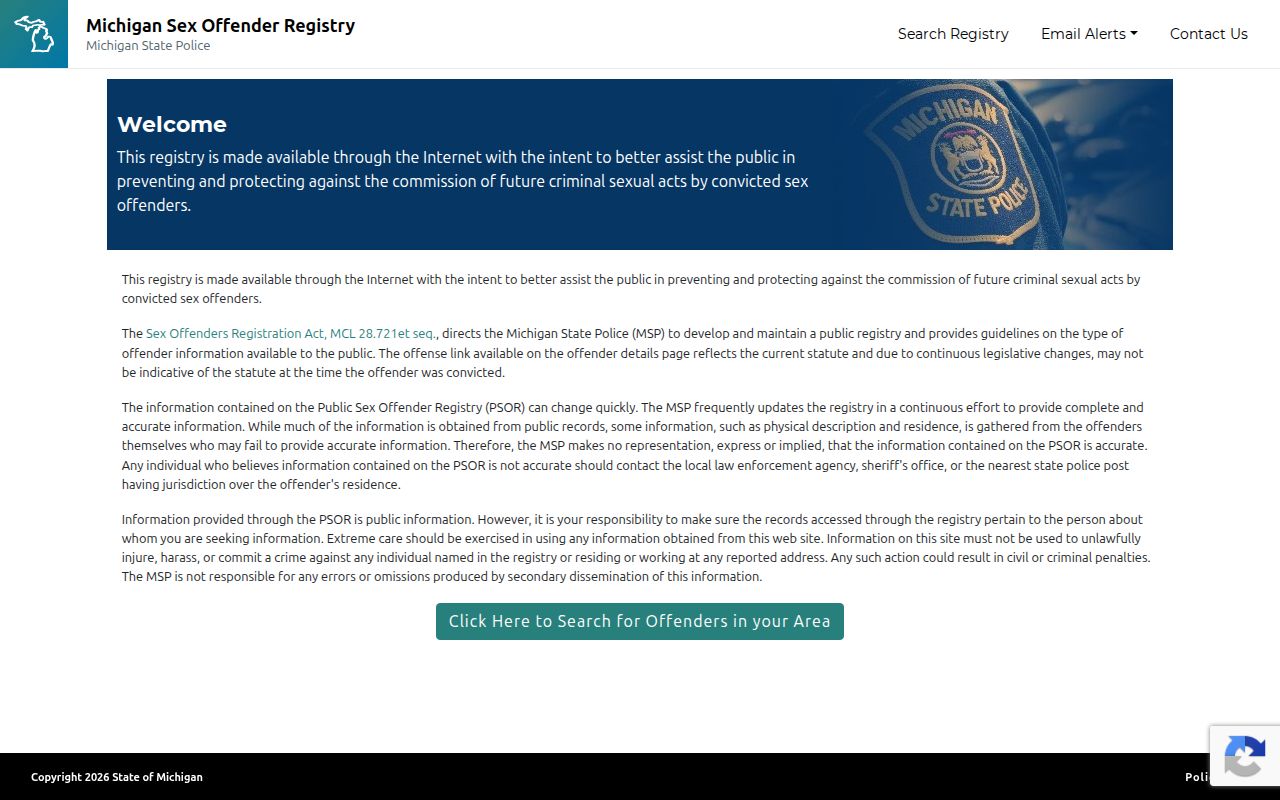
The portal is the authoritative Michigan source for public profile detail, search controls, mapping, and offender tracking.
PSOR can slow down or become unavailable when use is high. Michigan State Police advises trying again later. The registry contact number is 517-241-1806. For a concern about a Branch County registration, contact the registering police agency, the Branch County Sheriff’s Office, or an MSP post. An immediate danger belongs with 911. These public and law-enforcement channels serve distinct purposes.
Branch County PSOR Search Modes
A person search and an address search should not be swapped without thought. A name search is best when the subject is known. Partial names are accepted, but first and last name must be used together. Registration and MDOC numbers offer tighter identifiers when available. An area search is better for community awareness because it can show published registrants tied to Branch County, Coldwater, Bronson, a ZIP code, or an address-radius map. The result depends on the fields used and on the public address data currently available.
Name search Finds published profiles by first and last name, including partial-name searches.
County search Lists published records associated with Branch County through the county selector.
Neighborhood map Uses an address and a quarter-mile through five-mile radius for nearby mapped records.
Status list Opens statewide lists of published, incarcerated, or non-compliant registrants.
Note: A gray Map Offender control means the address has not been mapped; it does not erase the rest of the profile.
Searching the Michigan Public Sex Offender Registry
Michigan State Police publishes registry guidance alongside PSOR. Read the terms before submitting a query, then choose the narrowest method that answers the question. Do not assume a single result is the correct person based only on a shared name. Compare aliases, birth date, photograph, physical details, registration identifiers, and offense information before drawing any conclusion.
- Open PSOR, review its conditions of use, and choose a name, location, map, or identifier search.
- For a Branch County view, select Branch in the county field or add city, ZIP, and address details.
- Review the result list and compare several identifiers, especially when the name is common.
- Open View Details, read the complete profile, and note whether mapping or tracking controls are active.
| PSOR field | Input type | Required | How it works |
|---|---|---|---|
| First and last name | Text | Conditional | Both are needed for a name search; partial names are accepted. |
| Registration or MDOC number | Text | No | Uses a known official identifier instead of a broad name match. |
| Street address | Text | No | Add city, county, or ZIP when using the registry search. |
| City, county, or ZIP | Text or selection | No | Select Branch for county results or narrow to a local area. |
| Neighborhood radius | Map selection | Yes for radius map | Choose 0.25, 0.50, 1, 2, or 5 miles. |
| Published status lists | List control | No | Shows all published, incarcerated, or non-compliant records. |
The Michigan State Police registry guidance is the source for the search process and public-data limits shown here.
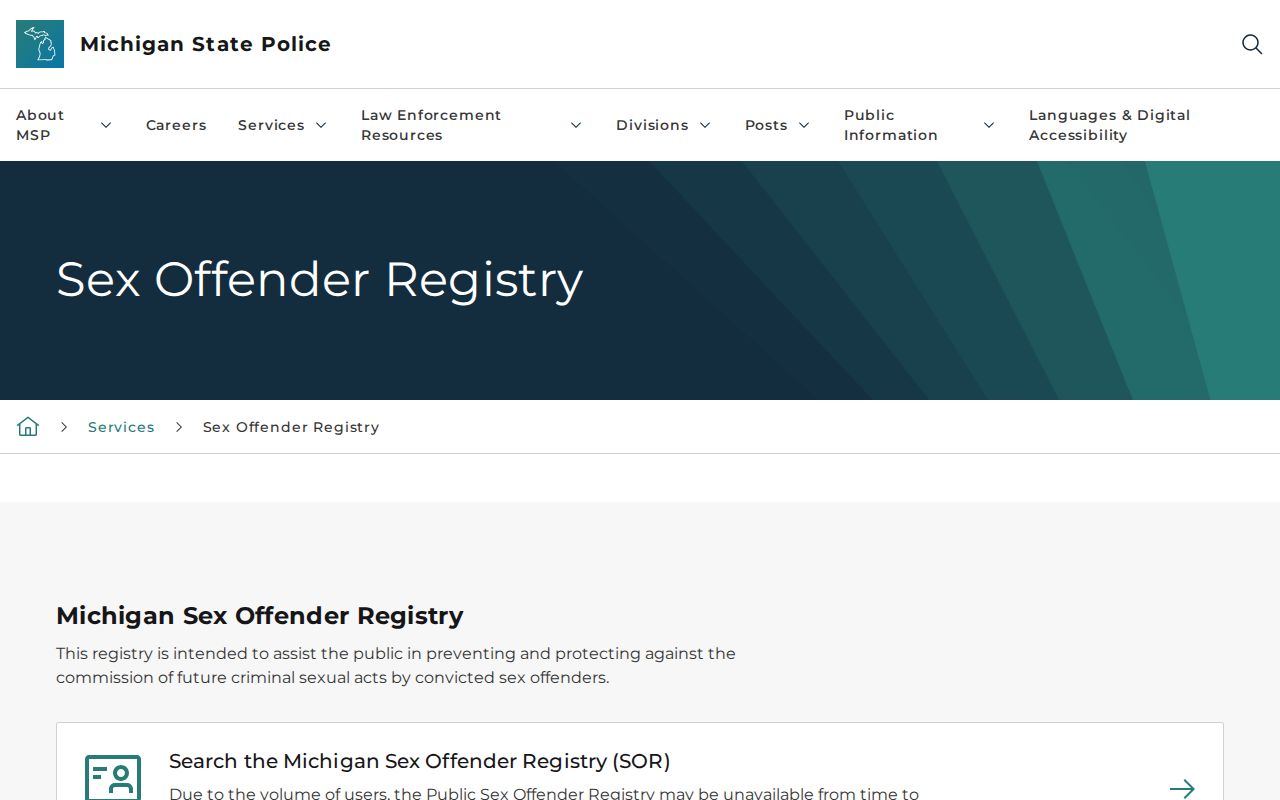
That guidance helps explain why the public PSOR view and the full law-enforcement registry are not identical.
Branch County Registry Across State Lines
Branch County sits on Michigan’s Indiana border, which makes a second search layer useful. The U.S. Department of Justice’s National Sex Offender Public Website, or NSOPW, searches the public registries of participating states, territories, and tribes. It helps when a person may live, work, attend school, or move across a state line. NSOPW is a federated search, while Michigan PSOR remains the primary source for a Michigan profile’s details and Michigan reporting guidance.
The national interface appears in the official NSOPW source assigned to this Branch County registry page.
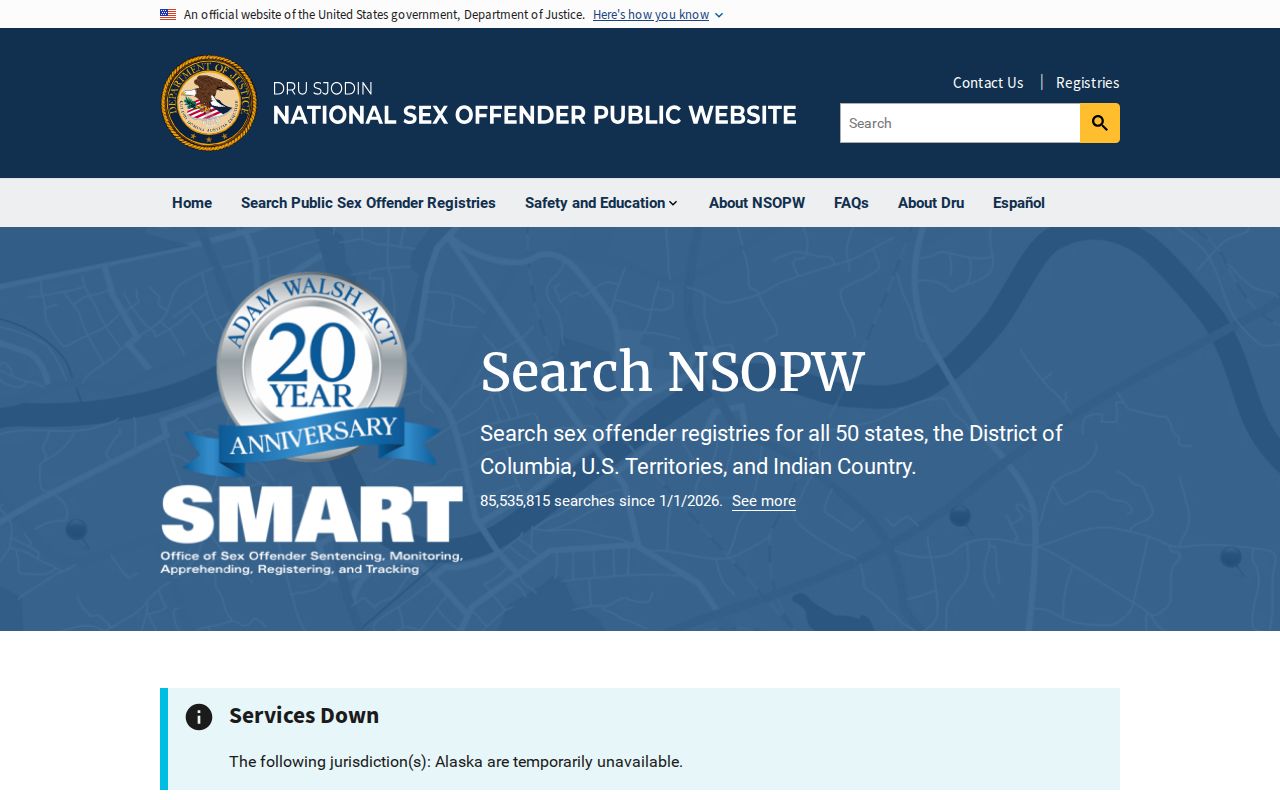
The national layer broadens geographic coverage, but a Michigan result should still be checked in PSOR for its current public profile.
If an NSOPW or PSOR query returns nothing, confirm spelling and try both a name and area search. Widen the radius when checking an address. Absence does not prove that no sex-offense history exists. Michigan cites nonpublication reasons that include some juvenile adjudications, non-listed offenses, older convictions outside the act’s reach, removal by court order, set-aside convictions, HYTA status, expired registration periods, death, and nonresidency.
What a Registry Profile Shows
A public profile combines identification, registration, location, and offense data. It may also carry a compliance label. That label describes the registry’s current administrative information and is not by itself a new criminal conviction. Victim information is withheld. The law-enforcement registry also contains nonpublic material that does not appear in PSOR, so a public profile is not the whole registration file.
| Name and aliases | Published legal name plus known alternate names used to improve identity matching. |
|---|---|
| Photo and description | Photograph, date of birth, physical identifiers, scars, marks, and tattoos when published. |
| Registry identifiers | Registration number and an MDOC number when one applies. |
| Address and map | Published residence information with an adjustable map when the address has been mapped. |
| Offense information | Public offense and registration details tied to the statutory record. |
| Other reported details | Campus, employment, vehicle, registration status, and compliance fields when public. |
The Michigan Sex Offenders Registration Act framework supplies the legal setting for the Branch County public record.
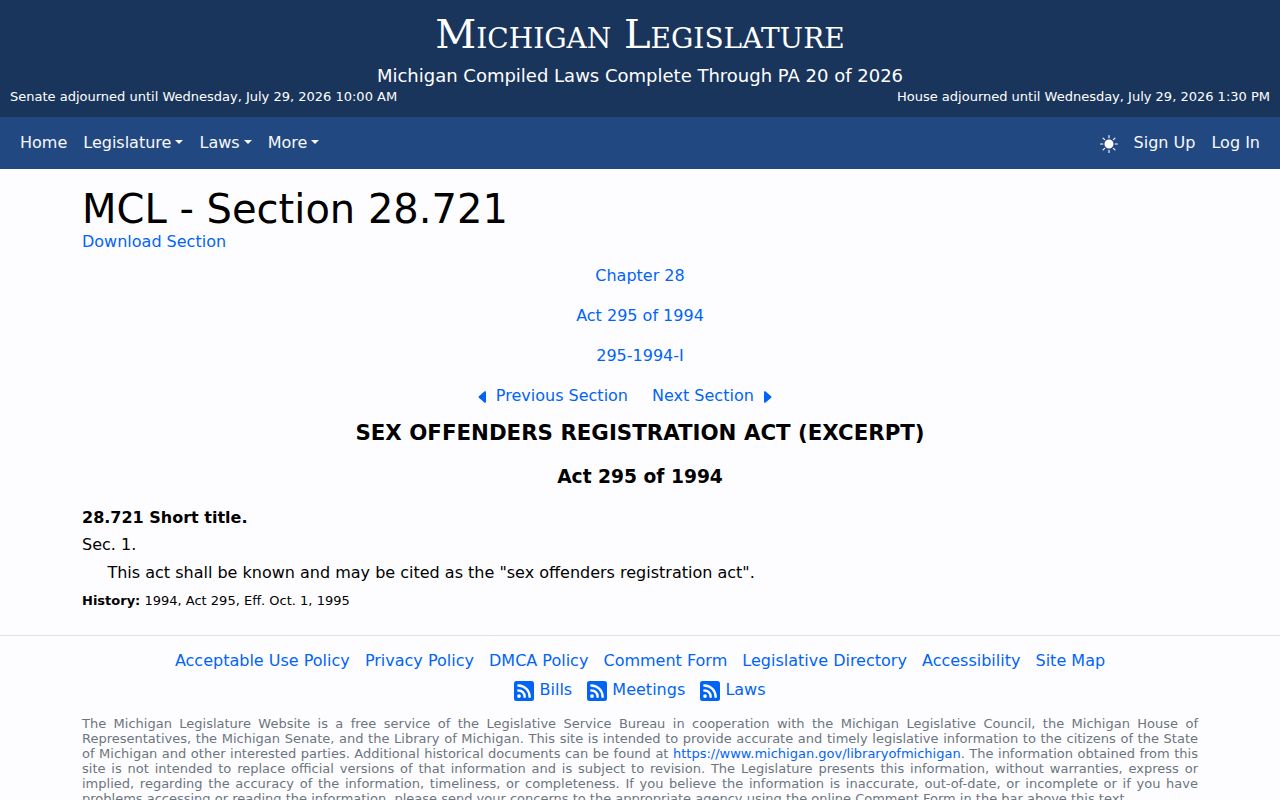
The statute explains why public registry fields reflect legal reporting duties rather than a private risk score.
Branch County Registry Email Alerts
PSOR offers two forms of email notice. Address-proximity monitoring begins under Email Alerts and Register. A user selects a radius, enters the monitored address and an email address, accepts the terms, and submits. The system can send notice when a registrant moves, enrolls in school, or is employed inside the selected radius. The permitted distances are 0.25, 0.5, 1, 2, and 5 miles. Michigan State Police says the confirmation should arrive within 24 hours, and one email account may watch more than one address.
A specific profile can also be followed through Track Offender. Enter the email address twice and accept the terms. That option sends updates when the selected registrant moves or changes reported employment or school enrollment. It differs from watching everyone within a Branch County address radius.
Note: Email notices support awareness, but urgent safety concerns should go to 911 or the appropriate law-enforcement agency.
Registration Requirements and Levels in Michigan
Michigan uses an offense-based tier system. Tier I, Tier II, and Tier III come from the offense and statutory rules. They are not an individualized finding that a registrant poses a set level of danger today. Limited petition or removal provisions may apply in defined cases, so the exact listed offense and exceptions must be checked under MCL 28.722 and 28.725.
| Michigan tier | General duration | In-person verification | Public meaning |
|---|---|---|---|
| Tier I | 15 years | Once each year | Offense-based category, not a present-risk prediction. |
| Tier II | 25 years | Twice each year | Offense-based category with a longer reporting period. |
| Tier III | Life | Four times each year | Quarterly verification, subject to limited statutory relief. |
Michigan also requires prompt reports of many changes. Residence, employment, legal name, and higher-education enrollment changes must be reported in person within three business days. Longer temporary lodging, vehicle changes, and telephone changes may be reported in person, by mail, or by drop-off within that period. A move out of state must be reported in person no more than three business days before the move. The one-time initial fee is $50, followed by $50 annual fees up to a $550 lifetime maximum, subject to the act.
Branch County Registry Reporting Channels
Registration and suspected noncompliance may be handled by the local registering police agency, the Branch County Sheriff’s Office, or an MSP post as SORA allows. The sheriff’s office and jail are at 379 Keith Wilhelm Drive in Coldwater. Sheriff administration lists weekday hours from 8:00 a.m. to 4:00 p.m. and 517-278-2325. Those are general office details, not a verified promise of a dedicated registry counter, appointment schedule, or walk-in verification time. Call before traveling.
For the offense behind a public entry, contact the court of conviction. When that county is unknown, Michigan State Police says ICHAT may help identify it, though ICHAT requires a name and birth date, charges a fee, and excludes some records. Once a Branch County case is identified, the Branch County criminal court case record can supply the docket and disposition detail that PSOR does not.
The public-registry provisions in MCL 28.730 show the statutory basis for publishing authorized information.
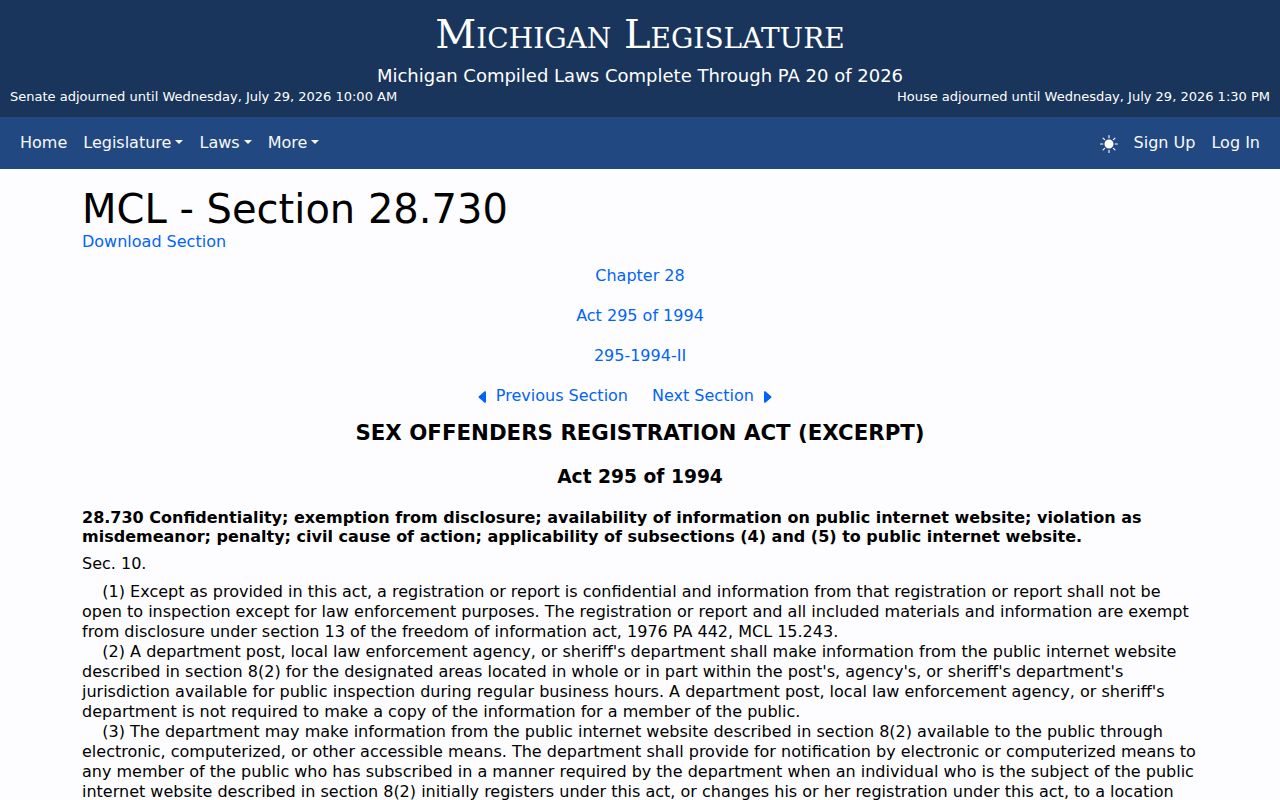
The public database omits victim information and other registration material that state law keeps outside the public PSOR view.
When Branch County PSOR Has No Match
Start with the query, not a conclusion. Check name spelling and aliases. Search by both name and location. If an address is the focus, include the city, Branch County, or ZIP code and test a wider map radius. If the portal is busy, return later. A no-match result can stem from the search fields, an unmapped address, or a lawful reason the person is not published.
Michigan does not state a blanket statewide school or park distance ban for every registrant in its current SORA materials. Do not draw a residency-rule conclusion from a map. A local restriction would need its own current, verified ordinance and enforceability check. The PSOR map shows published location data; it does not decide whether a home violates a rule.
The Michigan criminal-identification law source illustrates that registry records and general criminal history operate through separate legal systems.
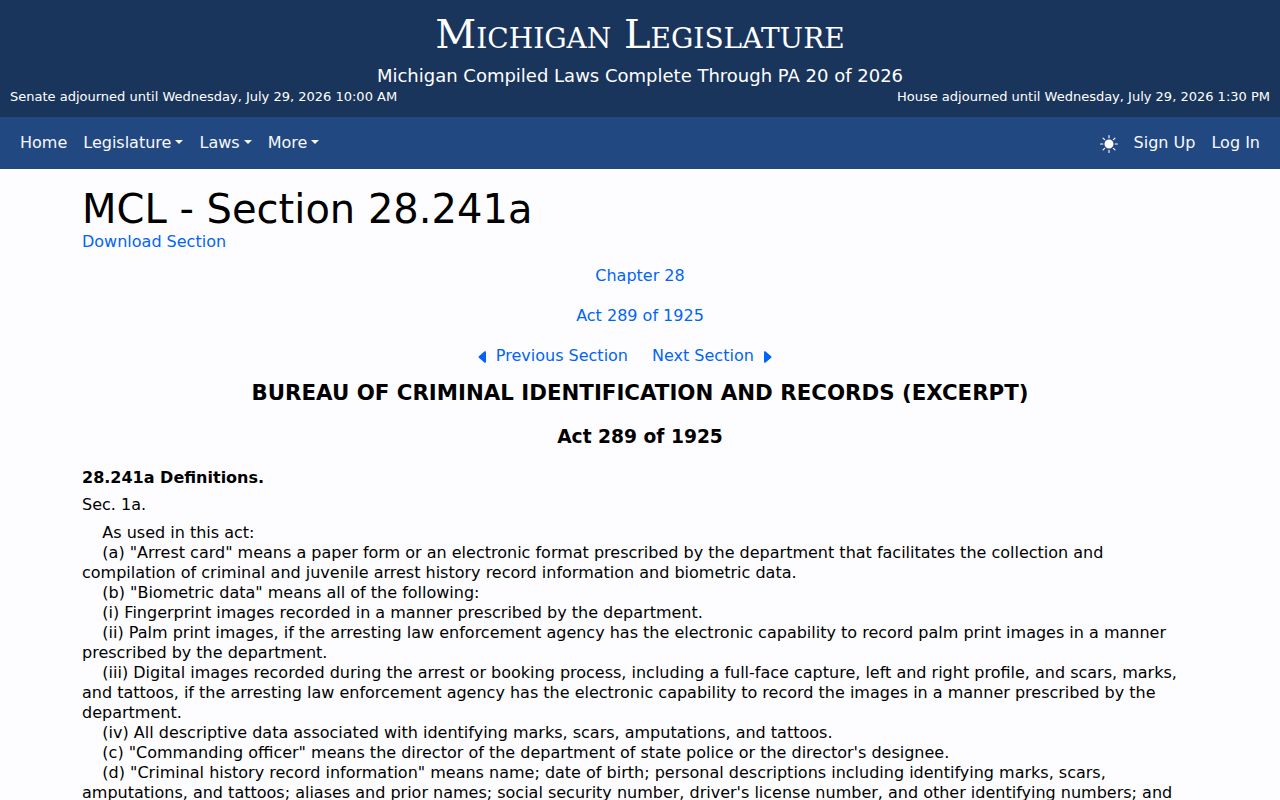
A missing PSOR profile therefore should not be treated as a clean general criminal-history result.
Lawful Use and Community Notification
Registry information supports community awareness and personal safety planning. It does not prove that every listed person will commit another offense. Contact law enforcement about suspected noncompliance rather than approaching the person. An Absconder label means the person’s whereabouts are unknown from the last reported address. Other profile statuses, such as Incarcerated, Pending Out of State, Homeless, School Only, or Employment Only, each describe a registration circumstance and should be read in that limited sense.
Use registry records lawfully: Misusing PSOR information to threaten, intimidate, harass, trespass, or commit another crime is unlawful. MCL 28.730 authorizes a public registry; it does not authorize vigilantism or abuse against a registrant or household.
Suspected reporting violations belong with the Branch County Sheriff’s Office, the local registering police agency, or Michigan State Police. Call 911 for immediate danger. Community notification works best when the public relies on current official fields, uses email tools as intended, and keeps registry status separate from rumor, punishment, or prediction.